

"Writing a poem is like trying to get to a house in a flood": An Interview with Lisa Lewis
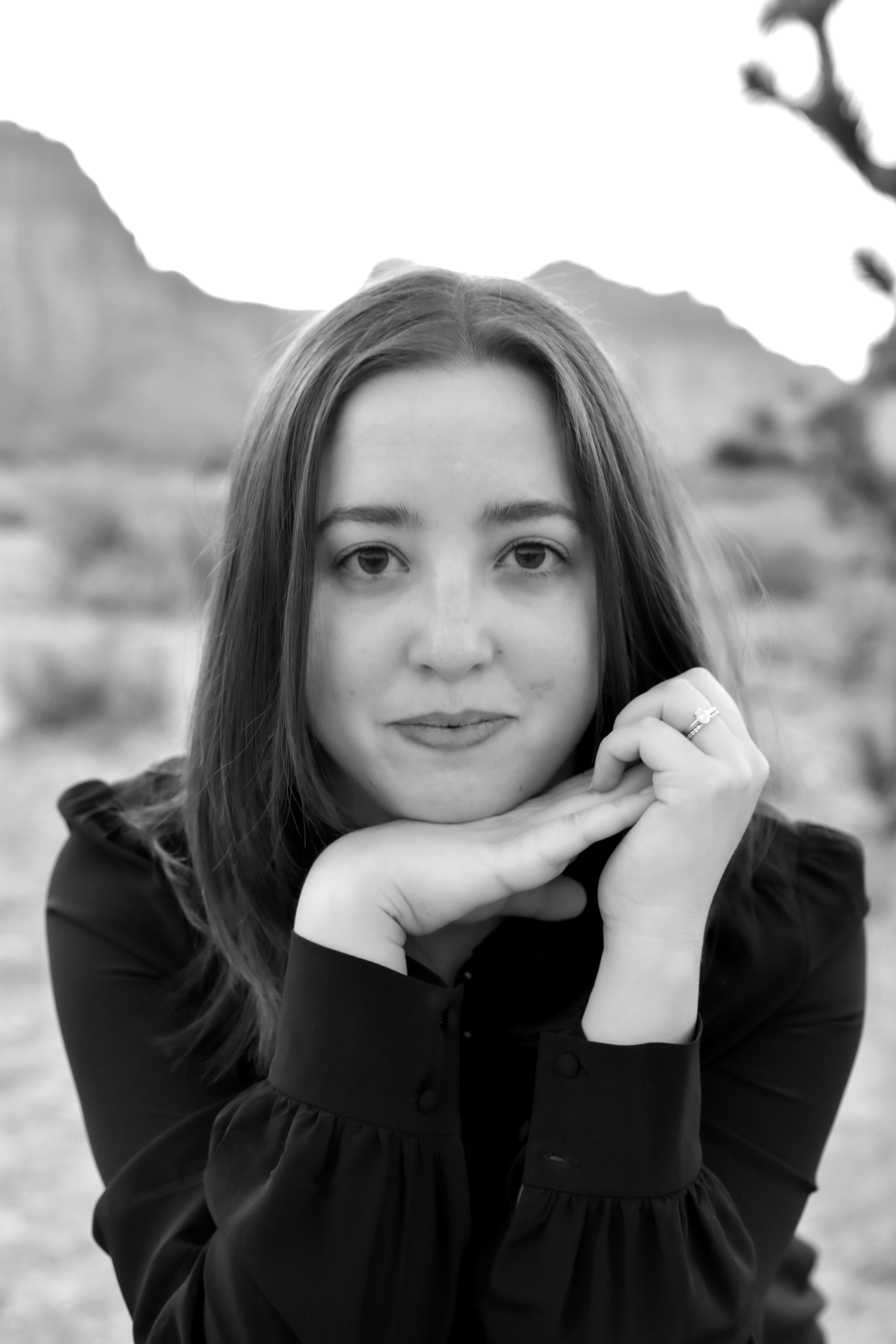
Lisa Lewis has published eight collections of poetry, most recently Taxonomy of the Missing (WordWorks, 2018) and a chapbook, The Borrowing Days (Emrys, 2021). A ninth collection titled Present and Future Storm is forthcoming from WordWorks. Recent work appears or is forthcoming in Dialogist, Action, Spectacle, Free State Review, Puerto del Sol, Clackamas Literary Review, Florida Review, New Letters, and elsewhere. She teaches in the creative writing program at Oklahoma State University and serves as editor-in-chief of the Cimarron Review.
I know Lisa as a professor, mentor, and confidant. She is a person who says what needs to be said aloud, in a way that feels similar to huffing off a sports coat. Unapologetic, she and her poetry are a force that is never forced—her poetry lends meaning because the pursuits of the poet are meaningful, the feats in craft not performative but urgent in the need to communicate. I was honored to sit down and talk about how politics influence poetry, natural forces, and the desire to dig out truth.

WK: I'm going to start with a softball, which is what's inspiring your work these days?
LL: Oh, well, politics have been inspiring my work these days, and there has not been quite as much of my work these days because of politics, too. So, I'm hoping to get past that somehow, and I think I might be getting close. I think I’ve written only two poems so far in 2026, and I'm normally considerably more prolific than that. I get inspired normally when things aren't quite as upsetting in the national landscape, often by the landscape here [in Oklahoma]. My big subject over the years has been women, and that's become even clearer in my last manuscript, which I haven't started sending out yet, but I'm pretty happy with. It's feminist-focused. It seems more focused than any of my other collections.
WK: Do you feel like the overturning of Roe v. Wade played a part in your work beginning to focus more critically on the feminist subject?
LL: Oh, absolutely. It gives it a more focused energy. I have a poem for, you know, I tried to write an abortion poem basically my entire career, but it always felt like it landed a little bit wrong. It's like, well, do I even want to send this out? Is this what people can hear? Can they even hear this idea about abortion right now? And it usually… it always seemed like, no, I guess probably not. But when Roe was overturned, that changed things. I did an AWP panel with several other women, and I wrote this poem for that panel, so it's in the new manuscript, and it does feel like a lot of the other poems cluster around that.
WK: You mention whether an audience can hear the poem when writing about some of those really
emotionally charged or taboo subjects, and I was thinking about, particularly in your earlier works, like in your book Silent Treatment, which has a couple of poems that are quite dramatic in subject, and one poem about rape. I recently spoke to a graduate poetry class about Gasher Press, the press I serve as executive editor, and I told them that the press is not interested in vulgarity and/or violence. To that, a student asked, "Well, what do you mean by that?" Essentially asking, well, how much vulgarity or violence can I include before it's too much? And I think that it is not so much about the subject's centering on violence or vulgarity, but about the approach of the subject by the poet, which is to say, where do you want your reader to stand in the room? In the corner, directly overhead, holding your hand? It's hard to be in the room with a poem about rape, hard to hear it—it's uncomfortable to be an onlooker in that room, worse to be made complicit—but I feel as though your poem "Bogart" from Silent Treatment is more investigative of the human response and capacity to respond: blame, shame, guilt—the rapist in the poem dies by suicide, and the speaker's feelings are complicated. It doesn't shy away from the subject; the voice is very direct and clear, but there is a move toward essence over sense that I appreciate. How do you approach these subjects, rape and now abortion, with nuance and curiosity that invites readers into a space for listening?
LL: Well, you know, I was a rape baby myself. My mother was raped, and that's how I came into the world, and she did not tell me the whole truth about that for decades. She fed me various versions of my alleged father's life that were all false. She wrote a fake name on my birth certificate. So, when I finally got the truth out of her, I could tell that it was something she didn't want to talk about. My mother was quite a free-spoken person herself, generally, except for that.
I grew up feeling like there was a mystery around that, and I had to find out what it was. So, I had a sort of detective personality as a very young person, a child going through her mother's papers when she wasn't there, seeking information, photographs, whatever. There was nothing there. That sort of shaped my consciousness, I think. And then when I studied with Stan Plumly, something he used to say was, tell where it hurts. And I thought that was…I like the simplicity of that. It's going to the doctor. Tell where it hurts. So, that piled into my existing temperament and helped me develop an aesthetic that really believes in not shying away, really believes that there are secrets that need to be told for life to be lived as it should be by all its participants. That people should not be doing things that need to be kept secret, and if things happen that are kept secret, they should be told.
WK: That seems to be consistent across your body of work: readers watch as a curious figure works through the materials, whether they come whole or incomplete, as they come. I was trying to think of what I would call a "Lisa Lewis poem," and I kept coming back to this idea of walking. I feel like when I read them, I'm walking through this terrain that unfolds in the way that it must—because it's a natural terrain. I never feel that the speaker is rushing to arrive somewhere or fabricating a shortcut around the denser parts of the land. It's more a genuine kind of attentiveness that is, like you said, this detective spirit, where an earnest attentiveness and a willingness to investigate longer and deeper get us to some pretty powerful realizations. I'm wondering how you enter and sustain these spaces, because these are long poems. All of your poems are long poems. So I wonder, how do you stay in very intimate spaces, very sensitive spaces, as an observer, and then at what point does intervention take place?
LL: It is a function of voice. It's like, I have to plant the voice in here in a way that organizes narrative and emotion around it. I'm thinking about the title poem in the book Vivisect. That's one of my favorite poems I've ever written, and it's weirder than a lot of my poems, I think. But that's why I like it, and I was very aware of doing things consciously that would be visible to a reader, a sort of marking off a space in which to say things about starfish or other things that might be gutted, the experience of gutting, eviscerating, splaying, laying open. That metaphor, the whole idea of vivisection, what could be more excruciating than that? It's almost too much, but it seemed necessary in that book, and to speak to the way that I was feeling about all of those experiences. I mostly wrote that book around the time my mother was deteriorating from a massive stroke in a nursing home, and I was helpless to do anything about it. So I was consumed with grief and anxiety about my mother; rifling through my past, and all the questions there, the questions that I could no longer ask her.
There is an urgency to what you're writing, and this idea of unearthing things, but that also seems to be maybe where your craft intervention is also concerned, which is making things be seen, or visible, because being able as a reader, to then see these things that the poem is urgently trying to uncover
itself, right? To save the last bits of dialogue that are going to be lost after, you know, your mother's passing. Or the things that need to be said and need to be seen. So maybe that is also part of the craft intervention, then, is how to make that thing actually visible to others, not just to yourself when you're writing these poems. I suppose everyone who writes has some sort of emblem or icon, or image that they refer to in their own thoughts as to what they need to do as they write, and one of mine is tearing away. And I think, tear it away. Make it be visible, make it be seen, and what are the things that need to happen in the poem, the landscape of the poem, the images, and the voice, to make that happen.
WK: And it seems like for you, a lot of that is, in part, simplifying things. Do you feel like that's part of your editing cycle as well: trying to clear out some of the distractions, that tearing away, as you put it?
LL: Yeah, and you know, sometimes I worry about that. I worry that I take that too far, and that some gymnastics might come in handy. But I think I have too much of a political sensibility to do that, you know? For me, poetry writing is a part of this urge for justice...and that seems like an overblown thing to say, but otherwise, it's self-indulgence, you know? There's not much correction you can really do in a poem, but that's still the mission of my art, at least, to correct my own negative experiences and failings, and to try to inject something, project something into the world, as tiny a corner of the world as it might be, that could do that for somebody else.
WK: I don't think that people often talk enough about poetry as a kind of mission for justice or supplying an ethics, unless talking specifically about activist poetry. I think people often think of poetry, in general, as a beautifying tool.
LL: Some ethics are embedded in poetry. People resist that talk, you know? They fear becoming didactic, and that's a real concern, obviously, and I think if someone tried to deliver ethical beliefs or content in poetry without really gauging the complexity of it, and how to pull back, it would be awful. I don't wish to engage in that, but actually, I don't think I really have. I think I've managed to avoid that fairly successfully. Somebody else might disagree. I mean, some people find any kind of feminist orientation to be sort of didactic by definition, but I just think that's false.
WK: To take us full-circle, I want to go back to what you said at the beginning of our conversation about what you're interested in writing about these days, which is politics and how it's, right now, a little bit of a barrier—but you've been living in a very politically "red" state for a couple of decades now, right?
LL: I'm in the middle of my 31st year.
WK: So then, how has that been a driving force in your writing? It's always been deeply conservative in Oklahoma, and I say this because you are someone who gets marginalized by those political policies, but certainly now, the landscape does feel, as you said, much more intense.
LL: My favorite years here, I was riding a lot. I had two horses, and I was riding all the time at boarding stables, with people who were undoubtedly, with a couple of exceptions, Republicans. And, you know, Republicans have money sometimes... and they like horses sometimes... and Oklahoma, a lot. And it's like, well, I'm not in my element right now, except I am. I was better with horses than a lot of the right-wingers that I was surrounded by, and they were sort of aware of that, and I was too. So, it was sort of a filter for the political differences, and we didn't talk about them. I think everyone felt it, but it didn't matter, in a way. It just didn't matter, and it felt kind of transcendent and wonderful to be able to do that.
But that stopped being possible after Trump was elected. Interestingly enough, people became really vocal about him then, and I couldn't stand to be around that. And fortunately, my horses were getting old enough that I didn't need to be around [those people] that much anymore, so everything changed for me then. I became less aware of the wonders of the Oklahoma landscape and my own self-serving ideas about my ability to transcend the politics, and a lot more threatened by it, and I probably started to write somewhat differently then. That probably accounts for some of the shifts in my work in later years. I hadn't really thought about that.
WK: I remember this conversation that we had maybe a year or two ago—you're the author of eight books, right? You're a National Poetry Series winner, a professor, and yet, in this conversation we had, you stated that being in Oklahoma had kind of limited your career. I was wondering if you could talk more about that, just in a logistical sense, as someone who teaches poetry in this area, as someone who writes poetry in this area, someone who exists in this place, what does it feel like as a writer and as a teacher to create art and to try to teach art in a space like Oklahoma?
LL: It feels increasingly isolated.
I have felt like a little boat drifting out farther and farther into the sea. I went to major writing programs, and I felt plugged in to the national literary community in a fruitful way. I was visible. And over time, that has seemed to lessen. Of course, other people come along, things change, that's natural, but some of this is, I think, due to being in Oklahoma, and the way the rest of the literary community is bound to look at Oklahoma. They're not wrong to be skeptical of it. I don't blame anyone for that, and yet I feel it has sort of drawn a veil over all the writers in this state. Why wouldn't they assume that something is wrong here? Something is wrong here.
WK: Part of this project, Boor Soirée, that we're looking to accomplish is not only about maybe looking at some of the political, social, and economic issues that hinder writers of the rural U.S., but also, this idea that rurality may be a kind of craft. One thing that I think about in your poetry is how it's both pressured and quite expansive, much like the small town you live in, surrounded by large plains. Have you thought of, or do you think it is possible to think of rurality as a type of poetic craft?
LL: Well, certainly, the expansive space is all around me. I live in a house that flooded in 2019, just months after I had bought it, and I had been really concerned about buying the house—I had lived in a house on the floodplain for twelve years already, and it had almost flooded, and this house is in the same floodplain—It's like, am I insane?
Well, it flooded. So, that certainly became a craft necessity. My book that's coming out either this year or next, titled Present and Future Storm, is mostly about the flood and the aftermath of the flood. So, I'm dealing with all this space, and exactly how it can feel so large, and yet so incredibly confining. Like, obstacles! Your house is surrounded by water! You don't even know how much water is inside your house. You can't get to it, except in a boat, and you don't have a boat. You have to get somebody to take you to your house in a boat.
Writing a poem is like trying to get to a house in a flood. You don't have a boat, but you gotta get there. You need to find out what's inside. Did anything die in there? It's like pulling what little resources you can get your hands on. I mean, I feel like if we're really talking about craft, we're really talking about crafty, right? Like, making something out of very limited available resources to try to see if anything's alive in your house. That's the analogy for the poem.
Listen to Lisa Lewis read some of her poems HERE.


Comments