

"Departure doesn’t offer any lasting freedom": An Interview with AJ Wright on THE RIVER ON OUR HANDS

The River on our Hands | Pulley Press | $18.00
It is hard to tell where documentary ends and lyric begins in the poems of The River on our Hands; the simultaneous voices cluster small spaces of a small town, rabid like the waters of the tragic Pleasants Power Station cooling tower event that now haunt the Ohio River town that Wright writes from in this debut collection, where nearly every resident is related to a victim of the flooding. I asked Wright about writing about compressed time, the immovable future, muds of the river, and how documentary writing collides with the personal.
Whitney Koo: I want to begin by reflecting on the title The River on our Hands, and how closely it mimics the common phrase "to have blood on your hands." Your collection works in documentary, and I wonder if you can speak more about the accountability—"The rock is an accusation" (36)—and the ethics that are embedded in a project of documentary poetics and how they play a role in the writing of this book.
AJ Wright: The title arose from the fact that the Ohio River is everywhere in the book, whether or not it’s mentioned explicitly. It’s the only real constant, and it serves as a kind of grounding presence in a lot of ways, because the people who live in these poems know what a river is. They don’t necessarily know what it means to witness a disaster and its aftermath.
That’s still true, but it’s an interpretation that’s mutated a little. When I talk about how some of the poems in the book were written, I always come back to the way the collection shifted from the form I imagined it taking. It was pretty dramatic. For the more documentary poems, I originally saw myself sitting down with people and quite literally having conversations I could pull from, but it was clear early on that that wasn’t going to happen. I expected a certain amount of pushback, but that pushback manifested in a way that caught me off guard. People were protective of the story of the cooling tower collapse, which wasn’t surprising, and they were also protective of the failures that led to it happening, which was. The thought that I might promote the idea that the victims and their families, as well as the wider community, had had something done to them seemed offensive, almost, so I backed off and depended more on newspaper archives than I’d planned to.
I started to read the situation as a volatile mix of small-town pride and misplaced guilt, and I think that does kind of call back to the idea of a subject “having blood on their hands.” There’s a shadow of culpability for the collapse that the community absolutely didn’t earn. It was something I’d never considered, and I had to teach myself to write in a way that accommodated those complicated beliefs about identity and victimhood. The poems became less straightforward. I didn’t have to temper my language, exactly, but I made a point of not “naming names” in the way I’d planned to; there was no pointing at a specific out-of-state company, or a specific industrial mistake. That wasn’t the story anymore.
WK: One of the major feats of this collection is the lyric engagement with documentary, and we see the effects of this juxtaposition in proximity when we think of the temporal squeeze that happens in these poems. How do you understand the relation between past and present as it works in a poetic field of vision:
The record
wants vertical.
Father and father
before,
iron-blue vein
woven through.
Loomed.
A straight line
is a lie. (41)
AJW: This isn’t something I have to actively think about, because my growing-up was kind of swamped in the knowledge that the people in my very small town, and their children in my very small class, were all connected in some way to the collapse that’s central to the book. Many of my classmates were related to more than one victim, and while I wasn’t, the cooling towers are literally in the background of so many of my childhood photos. Looming, actually. That’s where that word came from. My dad grew up next to the plant, my grandpa worked there, my uncle works there now.
The past becomes background noise. There’s no disentangling when you drive by the plant every day, when you can point to the spot on the rebuilt tower where the concrete peeled away. We’d have to pick up and move to get away from it. Forcing a clean separation between past and present in these poems didn’t make a whole lot of sense. Even if I’d managed to do it, it would have been dishonest.
WK: Speaking of temporality, I want to talk about the mechanics of motion in the collection. Early on in my reading, I was struck by the lines:
at the door the felling
still echoes;
still rings like a bell
in the eaves. (11)
The repetition of "still" had a particular effect, both of persistence and also the absence of motion, to be still, which we see replicated in images such as the "near-shuttered marble factory" but also in the recurrences of places: the go-karts, the mud, the ditches in which figures rise from, windows—so many windows for escape and containment—which makes the book circle itself in a way. How are you thinking about motion in this book?
AJW: It’s funny that you mention the repetition there, because I really felt like I was fighting myself over it while I was writing. Stillness is important in “The Sugar Tree,” but I didn’t want to repeat the word in a way that felt artificial or forced. The tree grows until it’s cut, and the house with its eaves is a sort of stoic watchman until it’s eventually torn down, which it was, in reality, somewhere between finishing “The Sugar Tree” and starting “Chalk Lines.”
So, there’s that, and the go-kart, and the marble factory. It’s all failed motion. The go-kart was never going to be a means to escape, and the marble factory was part of an attempt to market the Mid-Ohio Valley to the wider region as some kind of hub for recreational glassmaking. Its impending closure put a stop to that.
The poems return to the mud and the ditches to treat them as anchors—in “The Bridge,” for example, the rock-thrower is very much of the place, while the speaker, returning from somewhere that might be considered more “real,” experiences the rock as punishment for having left. The speaker manages to leave in a way the boys of “We Build an Airplane” couldn’t, but that departure doesn’t offer any lasting freedom. Once the boy has thrown his rock, he’s able to flee because he knows the mud and the ditches and the cornfields. The only person who’s allowed to stay in motion is the one who was never looking for a way out.
WK: I've always felt that documentary poetics "lives in the gaps," or as M. NourbeSe Philip wrote in her reflection on writing Zong!, "the story that must be told but can never be told." And so, rather than simply filling these gaps, the best documentary works operate in doubt; the facing of voids knowing that they are full. We read a lot of "maybe" and "could" and "almost" in The River on Our Hands: "—you're heading north past Deerwalk, past Waverly and the road to Pumpkin Knob. Maybe you'll find the marina; maybe you'll get to see the train." (10)
or later
I can't spell the name
of the bone-white shells
raked by the handful
from the silt,
thin as fingernails,
quiet as parentheses. (33)
and I find this choice particularly interesting because these poems are narrative, and yet they maintain an unintelligibility that comes from working within the gap. Can you speak more to the balance between narrative and mystery, the said and the unsaid—how did you negotiate these different poles of interest?
AJW: My instinct, for better or worse, is to let a poem keep some secrets. I don’t like to force explanations where they don’t fit, and that’s generally been my approach even to more narrative pieces. This is an impulse I used to struggle with, but I think in a lot of cases, ambiguity serves the work in a more satisfying way than telling a reader exactly what to make of an image. A poem like “The Map by Hand” offers a list of makeshift landmarks—guideposts on the journey to the reward the visitor might get—and the hope is that those landmarks speak for themselves. It’s no World’s Largest Ball of Twine, but the new Dunkin Donuts is notable simply because the speaker added it to the list.
“Good American Speech” is a little different. By the end of the poem, the speaker has acknowledged the limits of accent and dialect, and in doing so has lost the ability to describe their world in a way that feels familiar. They reach for the universal. They no longer have access to the colloquial name for the shells, but they do still have a common image to reference. My concern, with a poem like that, is that I’m making a compromise that will maybe shut some readers out. The poem opens with a catalogue of terms I forced out of my vocabulary when I realized that I was the only person in the room who used them. Mentioning a family member “redding up” before a meal was risky in certain company. I had a pretty low tolerance for teasing, and in the poem, the speaker begins by withholding meaning to protect themselves. It becomes the reader’s responsibility to decode the space between what the poem knows and what it’s willing to disclose. As a reader, I really like when a poem asks me to do that work.
I do try my best to strike a reasonable balance, though. I want to make things intelligible, but I don’t want to explain away the details that make a poem worth reading. It’s a matter of figuring out what a poem can afford to admit without losing something in the process and deciding to trust that the reader is capable of filling in the gaps.
WK: Speaking of Zong!, Philip also wrote about the project: “I fight the desire to impose meaning on the words—it is so instinctive, this need to impose meaning: this is the generating impulse of, and towards, language, isn’t it—to make and, therefore, to communicate, meaning?" (194). I think immediately of the poem from your collection "Latency Period" on page 56, in which you write, "Signposts meaning nothing / until they do—" and then later on page 61, "Classification means potential, / means a single small failure"; how were you thinking about meaning and meaning-making in the space of documentary?
This is something I started to get at earlier, I think. “Latency Period” and “Assessment of Dam Safety” are two of the most explicitly documentary poems in the book. It would take no time at all for me to find and hand over the source material if I needed to, but it wouldn’t tell you what you need to know. Not really. The documents aren’t meaningless—their meaning is available, and it certainly informed the work, but it’s not acted upon within the poems. Knowledge and interpretation aren’t the same thing. A person can read and understand medical reports or engineering studies and decide that their conclusions are an unnecessary hurdle because there’s an immediate material benefit to ignoring them. I’m guilty of doing it in the process of writing, and in the case of “Latency Period,” the subject does it repeatedly through the years of labor required to make a life. There are a lot of implied choices in these poems, and often a decision is made to abandon meaning in favor of maintaining a semblance of control.
WK: Final question here: I think The River on Our Hands is a strong example of how intensely history binds to the lived realities of people existing in rural spaces, perhaps more visibly than for people of more suburban or urban areas of the country. What has your relation to the past ultimately been like, and how does it affect your writing style and interests?
AJW: The obvious answer is that we’re all a product of our pasts. Everywhere I’ve lived has considered itself, at some level, a small town—even Bowling Green, where I went to grad school, didn’t feel like a city, really—so I don’t know to what extent this is actually true, but when you’re in a very small, insular community, by choice or by circumstance, it often feels like there’s nothing but the past. I’m not saying there’s an inherent refusal to accept progress or anything, but when you grow up with teachers who taught your parents, doctors who treated your parents, neighbors whose opinions of you are based on their feelings about your parents, life can feel painfully circular. All of that happens everywhere to some extent, but I suspect more folks in cities or suburbs are able to see beyond those experiences and eventually define themselves on their own terms. It takes a breadth of imagination a lot of people just don’t have access to. I don’t mean that to be insulting or to suggest that I’ve found a way out of that mindset, because I haven’t. The project I’m working on now deals a lot with illness and medical trauma, but I still find myself relitigating the past because in my early life, even accessing inadequate medical care meant being in the car for an hour, and as I got older, I had to drive across the state for medically necessary procedures, or out of state entirely to find decent providers. I’m comparatively healthy now, but I doubt I’ll ever get away from the fact that I was once a sick kid in a small town with small town opportunities.
Listen to AJ read poems from A River on our Hands here.

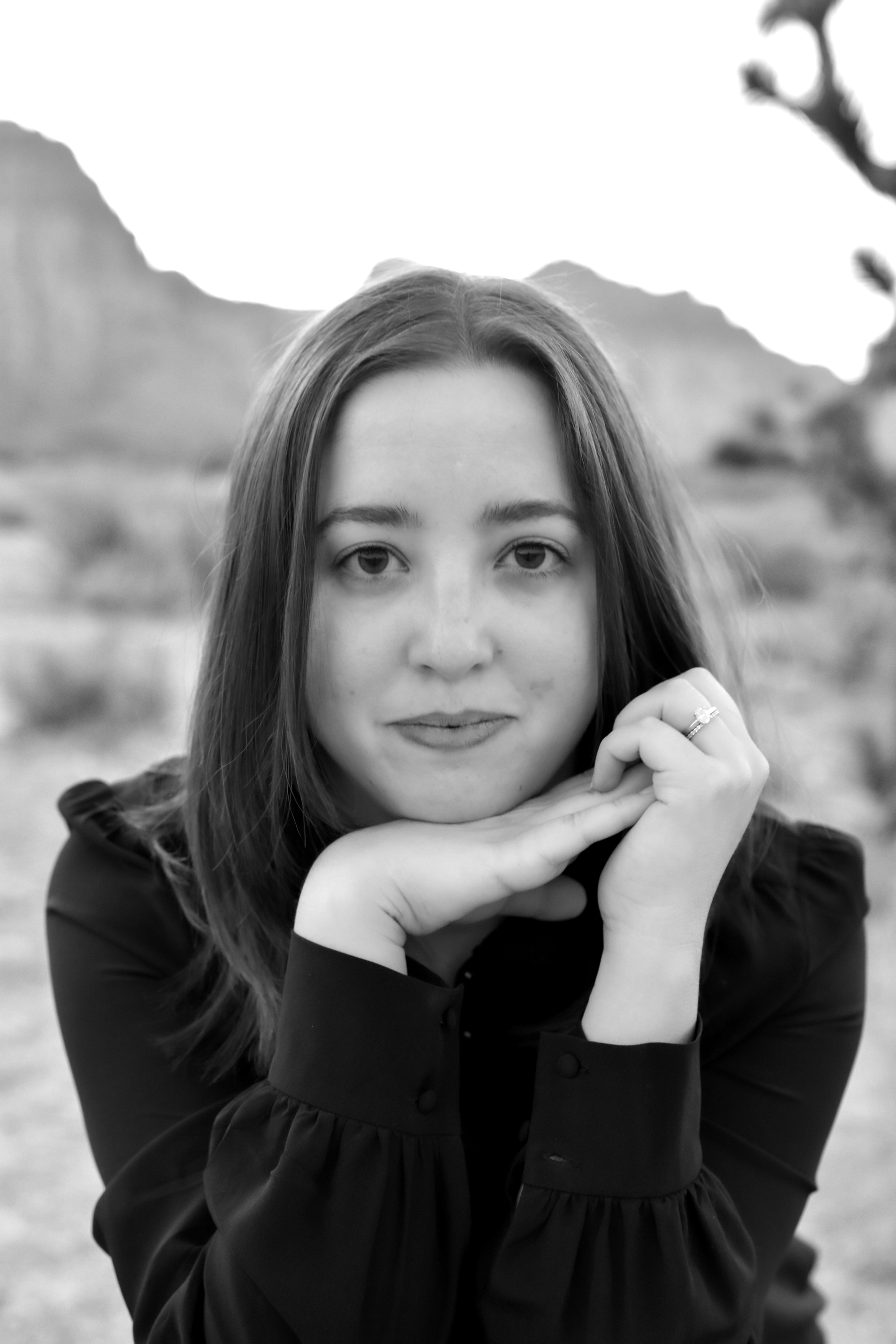
AJ Wright is a poet born in the Ohio River Valley region of West Virginia. She spent her early childhood in a house that stood in the shadow of the Pleasants Power Station at Willow Island. Her work explores the intersections of landscape, labor, and memory in Appalachian communities shaped by industry and environmental change. She is the founding editor of Pictura Journal, and her poems have appeared in Thimble Literary Magazine, Antiphony Journal, wildscape. literary journal, River and South Review, and elsewhere. She holds an MFA from Bowling Green State University and was awarded an Oak Ledge Residency at Hindman Settlement School in 2025. She currently lives five miles downriver from her hometown. The River on Our Hands is her first book.


Comments