

Learning: Boredom, Shame, and Sugar Beets: Teaching Poetry on the Plains
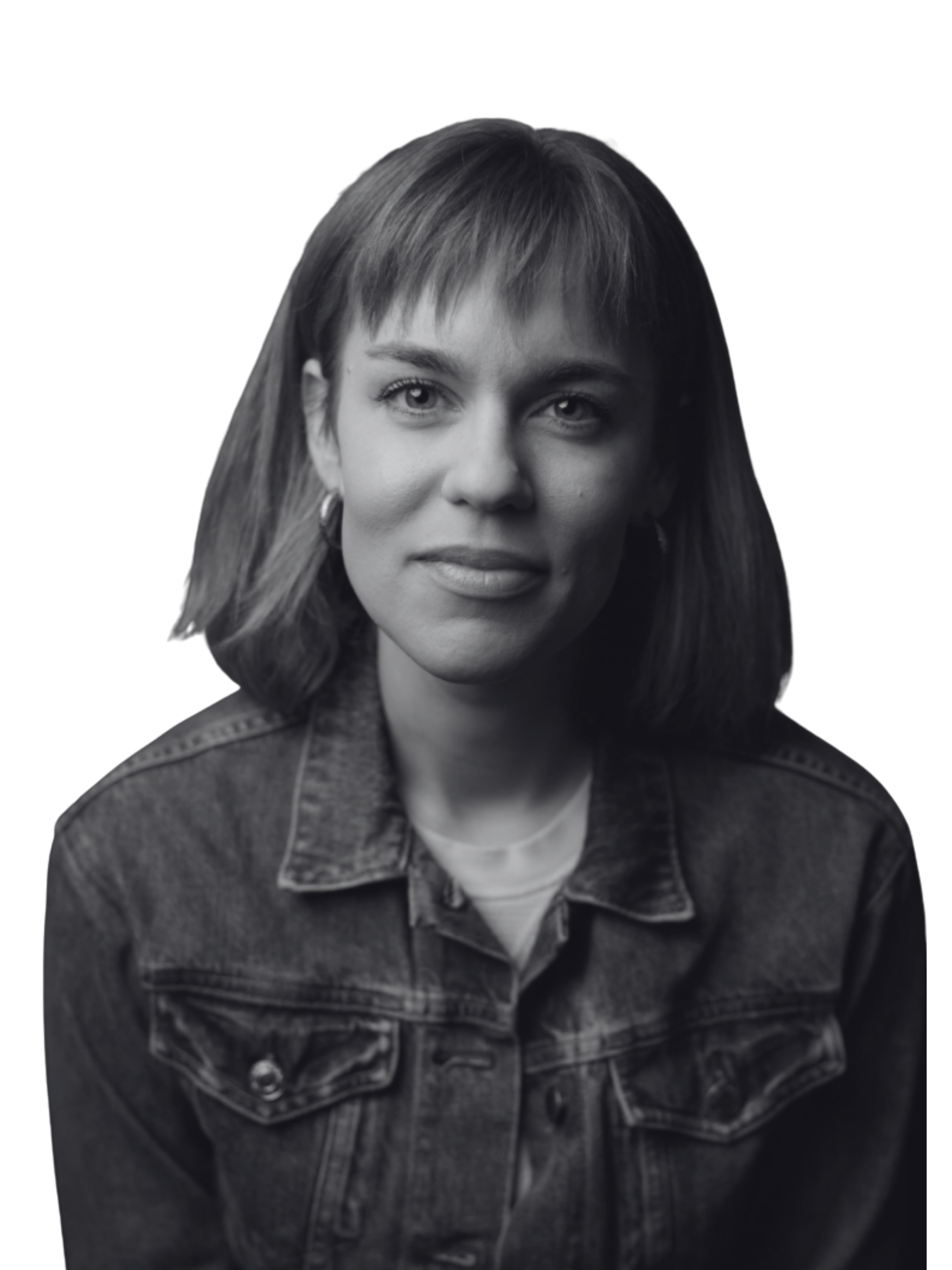
By Courtney Ann LaFaive

I teach at a university in rural North Dakota, two hours south of the Canadian border, where semis carrying dirty sugar beets rattle up and down 1-29 and the sunsets are punctuated with patches of light on either side of the sun, a so-called parhelion or sundog. The students I teach largely come from rural communities in North Dakota and northern Minnesota, where the appearance of sugar beets and plains with sundogs is commonplace. When I ask students why they chose our campus rather than a more urban one, such as the University of Minnesota, Twin Cities, they reply that such campuses seem “too big.” For them, coming to our campus, with a student population of 15,000, and its very own hockey stadium is big enough.
For students at rural institutions such as the one I teach at, creative writing asks them to engage with several subtle beliefs that often hold them back from writing with empowerment and confidence. My goal as an instructor is to gently dispel such notions. In my creative writing classes, I see a wide variety of students from majors spanning aviation, English, and pre-med. For those who major in the humanities, studying in such a discipline, much less writing fiction or poetry, can feel like a risk. Their families or peers may chastise them for choosing to study what feels like a frivolous academic subject that seems to bear no relevance to the industries of farming, business, or real estate that their peers may aspire to.
To boot, the lives of creative writing students’ unknown, projected peers studying on the coasts, students seemingly entitled to write in ways they are not, exert a psychic pressure on rural students. They often feel a kind of inherited, assumed inferiority. Which is to say they know the distain many heave towards rural populations when they attempt to engage in creative expression or critique (look at the late Marilyn Hagerty who went viral for her 2012 review of Olive Garden in Grand Forks where she was nationally mocked) or even simply exist (Sinclair Lewis’ 1920 novel Main Street and The Cohen Brother’s 1996 film Fargo both point to the ways in which rural Midwesterners are often pigeonholed as simple or dumb; stereotypes rural folks face worldwide). I sometimes see students writing poetry for an assumed elite audience; they believe impenetrability is the way towards being taken seriously. They use esoteric terms and write about the grittiness of imagined cities. They use British spellings, reaching for a kind of foreign sophistication.
Whereas for majors outside the humanities, they inhabit the creative writing classroom with the energy of having dislodged their favorite candy bar from a vending machine without paying. They couch their desire to write, saying it helps them unwind; they need this class for their mental health. They say it will look good on their medical school applications. Writing for the sake of writing is not a reason enough.
I, of course, speak in broad strokes. And, certainly, when my students express such things to me, I often see my own experience as a younger writer reflected back. I, too, grew up amongst farmland (albeit with Holstein cows and silos in rural Wisconsin) and, whether due to my roots or something else, also felt an assumed lowliness that would take me decades to overcome. At the first writers' residency I attended at the age of thirty-five, as other residents introduced themselves and shared their disciplines on our arrival day, I couldn’t even manage to say, "I am a writer." I would say, “I’m Courtney. I’m—" and my breath would halt. The word writer was a thing that felt too official, too important for me to claim or speak aloud. The second night, in a conversation over dinner, other residents filled in the gaps for me as I fell silent. A woman said, “Painter? Are you a painter?” I still said nothing, embarrassed by my inability to claim my craft, and, for the next four weeks, several women from that dinner assumed I was a painter. I never corrected them. In my humiliation, I vowed to become friendly with the phrase, and for the rest of that summer, forced myself to look into the mirror each morning and remind myself I am a writer.
Beyond this, whether simply parroting rural stereotypes or arising from an authentic belief, students often find their surroundings and experiences boring not only to them but especially to anyone outside them. They express skepticism that anyone would read something about their life in Minot or Fergus Falls. When I first arrived in North Dakota, and students described their lives as humdrum, I would ask them to list their areas of authority. They would list activities such as, farming, raising pigeons, serving in the Army National Guard, competitive snowmobiling, the entire catalog of Love Island, or working as an EMT. I would ask them about the coldest snowfalls and the thickest sheets of ice. The flood and fires of 2009. I would say, “That doesn’t sound boring to me.” Some merely gaped or rolled their eyes at my enthusiasm. This is all to say that writing creatively for students from rural backgrounds often asks them to engage with their own assumptions about their experience, and these suppositions—worthlessness, inferiority, taboo, or boredom—can often prevent students from writing in the first place.
To help students write from a place of empowerment and curiosity about their locality and how it influences them as writers, I begin by having a broad discussion about what it means to write from an inspired space versus a space of inferiority or shame. What attitudes, experiences, or tools invite us to write and what inhibit us? Texts that I utilize to help with this discussion include Myriam Gurba’s “It’s Time to Take Back California from Joan Didion,” Lacy M. Johnson’s “On Likability,” and Elissa Washuta’s “I Will Write a Bestselling Native American Biography.” While disparate texts, all speak to how to navigate the expectations placed upon us when we write and to literature’s power to both enact and resist stereotypes.
I also often include two particular collections in my poetry classes to invite students to explore their rural surroundings (no matter how monotonous they may seem) and to feel a sense of ownership and agency over their experiences. One text is Jody Gladding’s 2014 book Translations from Bark Beetle: Poems, published by Milkweed. It is a charming collection that includes “translations” of what appear to be frottage rubbings of bark beetle tunnels charted in tree’s shallow cambium layer and transcriptions of raven calls, among other transcriptions. There is something both erudite and playful about the text. Students are often disarmed by the book. Suddenly, poetry is not something elitist or impenetrable but mischievously made from the world around them.
After reading and discussing the text, I pass out compressed charcoal and paper and send students away for the weekend to create the source material for their own translations (they are also welcome to take photographs, video, or audio recordings). They can source anything they like—a car door, cattails, puddles, etc. When we return to class, we create our own interpretations of the world around us. What was once seen as mundane or shameful becomes an entirely new entity when we shift our perspective to animate and imagine unknown worlds. No longer boring, ruralness is full of possibility.
The second text I use is Yoko Ono’s 1964 artist book Grapefruit (originally self-published by Ono’s imprint Wunternaum Press and subsequently published by Simon & Schuster in 1970). The text is a delightful assemblage of lyrical instructions that often border on the absurd. For instance, one instruction reads, “Imagine the clouds dripping./ Dig a hole in your garden to put them in.” As with Gladding’s work, students are initially beguiled by the playful instructions which appear to be neither poetry nor entirely prose. After reading selections, I ask students to create their own lyrical instructions for navigating their particular landscapes, jobs, hobbies, identity, and dwellings. Students offer instructions on how to survive winter, find a date in Duluth, talk to their parents about politics, play D&D, find the best empanada in Fargo, or avoid sugar beets on the highway, among other topics.
This prompt activates a kind of authority and confidence in students that often remains dormant under the weight of stereotypes about rural communities and experience (not to mention the oppressions of marginalized identities). By putting students in a position of authority over their lived experiences and asking them to offer instructions to others, it often crosses over into their other poetic work. No longer are their experiences something to be ashamed of; rather, they see the richness of what they know and are empowered to share it.
When Marilyn Hagerty wrote her review of the new Olive Garden restaurant that opened in Grand Forks, published in the Grand Forks Herald in 2012, she wrote earnestly of the restaurant’s warm chicken alfredo and declared it to be “the largest and most beautiful restaurant now operating in Grand Forks.” Her review went viral, and she was mercilessly mocked online for her guileless engagement with an Italian fast-food chain. Superstar chef Anthony Bourdain ultimately came to her defense, stating that Hagerty’s review revealed a cuisine landscape that “too few of us from the coasts have seen.” Bourdain ultimately worked with Hagerty to publish a collection of her reviews with Ecco in 2013, Grand Forks: A History of American Dining in 128 Reviews. In the introduction, Bourdain writes, “This is a straightforward account of what people have been eating—still ARE eating—in much of America . . . A pre-hipster world where lefse, potato dumplings and walleye” still appear on menus. I teach poetry on the plains because, despite what stereotypes may lead us to believe, the lives and creative output of those who live in rural spaces are just as rich as anywhere else. It’s only a matter of giving students permission to write about what much of America experiences.

Courtney Ann LaFaive is an essayist, educator, and author of two books. Her latest book is Follow the Signs: Searching for Linda Goodman, America's Forgotten Astrology Queen (University of Iowa, 2026). She is also the author of the text/image chapbook Address Unknown (New Letters, 2025) and the memoir Daughter in Retrograde (University of Wisconsin Press, 2018). Her essays have been listed as notable in the 2020, 2021, and 2023 editions of the Best American Essays and can be seen or are forthcoming from The Missouri Review, Southern Humanities Review, and Literary Hub. Her work has garnered her a Fulbright Fellowship to Riga, Latvia, and support from the American-Scandinavian Foundation, Kunstnarhuset Messen (Ålvik, Norway), the Sewanee Writers’ Conference, USF Verftet (Bergen, Norway), and the Virginia Center for the Creative Arts. Courtney is an Assistant Professor of English at the University of North Dakota and a teaching artist with the Loft Literary Center in Minneapolis, Minnesota.

Comments